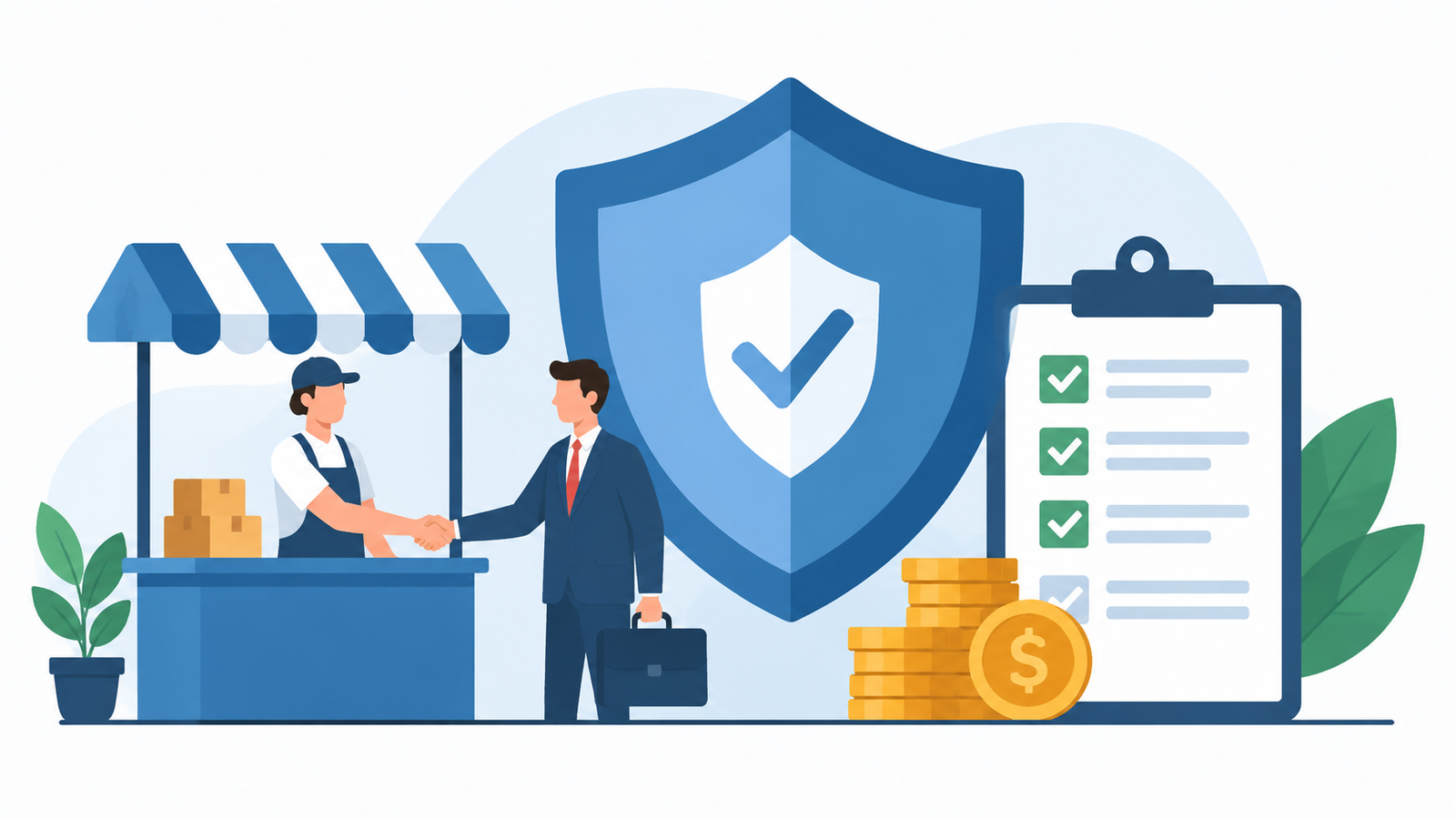
Businesses face different types of risks every day. A company may sell products, provide services, attend events, or supply goods to other organizations. Even when a business follows proper safety procedures, unexpected situations can happen, including customer injuries, property damage, defective product claims, or legal disputes. These situations can create significant financial pressure if a business is not properly protected.
Vendor liability insurance is a type of business insurance designed to protect vendors, suppliers, sellers, and service providers from financial losses caused by third-party claims. It helps businesses handle expenses related to lawsuits, legal defense, settlements, medical costs, and property damage claims when covered incidents occur.
For small business owners, entrepreneurs, online sellers, manufacturers, contractors, and event vendors, understanding vendor liability insurance is important because many commercial relationships require proof of insurance before a company can work with another organization. Retailers, event organizers, marketplaces, and corporate clients often ask vendors to maintain liability coverage to reduce shared business risks.
This guide explains what vendor liability insurance is, how it works, different coverage types, benefits, limitations, real-world examples, implementation steps, and common mistakes businesses should avoid.
What Is Vendor Liability Insurance?
Definition of Vendor Liability Insurance
Vendor liability insurance is a form of liability protection that helps cover a business when claims are made against it because of products sold, services provided, or business activities performed.
In simple terms, it protects a vendor from the financial consequences of accidents, injuries, property damage, or legal claims involving customers or other third parties.
For example, a company selling handmade cosmetics may face a customer complaint claiming that a product caused skin irritation. A food vendor may face a claim from customers who believe they became ill after consuming a product. A supplier may face a lawsuit if a product causes damage after being delivered to a client.
Vendor liability insurance provides financial support when these types of covered claims occur.
Why Does Vendor Liability Insurance Exist?
Businesses operate in environments where risks cannot always be completely controlled. Products can fail, accidents can happen, and customers may file claims even when a business believes it acted responsibly.
Vendor liability insurance exists to help businesses manage these risks.
The main reasons businesses use this type of coverage include:
- Protection against expensive lawsuits
- Meeting contract and partnership requirements
- Protecting company assets
- Improving business credibility
- Supporting long-term operations
Without insurance protection, a single large claim could affect cash flow, reduce profits, or even force a small business to close.
How Does Vendor Liability Insurance Work?
Step 1: A Business Evaluates Its Risks
Before purchasing insurance, a business needs to understand the risks connected with its activities.
A vendor should consider:
- Type of products sold
- Services provided
- Customer interactions
- Sales locations
- Industry requirements
- Contract obligations
For example, a food vendor has different risks compared with an online clothing seller. A construction supplier faces different liabilities compared with a handmade product business.
Step 2: The Business Purchases an Insurance Policy
After identifying risks, the business chooses an insurance policy that matches its needs.
Insurance providers usually evaluate:
- Business size
- Industry type
- Annual revenue
- Number of employees
- Product risk
- Coverage limits
The business pays a premium, and the insurer provides protection according to the policy terms.
Step 3: A Claim Occurs
A claim happens when someone believes the vendor caused harm, damage, or loss.
Examples include:
- A customer gets injured while using a product
- A product damages someone’s property
- A client claims a service caused financial loss
- An event visitor gets injured near a vendor booth
Step 4: The Insurance Company Reviews the Claim
The insurance company investigates whether the claim is covered.
The review process may include:
- Examining the policy details
- Reviewing evidence
- Speaking with involved parties
- Assessing financial responsibility
Step 5: Covered Expenses Are Paid
If the claim qualifies under the policy, the insurance company may help cover costs such as:
- Legal defense fees
- Court expenses
- Settlements
- Medical expenses
- Property repair costs
The amount paid depends on policy limits and coverage conditions.
Key Characteristics of Vendor Liability Insurance
Protection Against Third-Party Claims
One of the main features of vendor liability insurance is protection against claims made by people outside the business.
These third parties may include:
- Customers
- Retail partners
- Event visitors
- Property owners
- Business clients
Product Liability Protection
Many vendors sell physical goods, which creates the possibility of product-related claims.
Product liability coverage may help protect businesses from claims involving:
- Defective products
- Unsafe products
- Product-related injuries
- Property damage caused by products
Legal Defense Support
Even if a business believes a claim is unfair, defending against a lawsuit can be expensive.
Vendor liability insurance may provide support for:
- Attorney costs
- Legal consultations
- Court fees
- Settlement negotiations
Contract Compliance
Many organizations require vendors to have liability insurance before working together.
Examples include:
| Business Situation | Reason Insurance May Be Required |
|---|---|
| Trade shows | Protect event organizers from vendor-related risks |
| Retail partnerships | Reduce supplier-related liability concerns |
| Corporate contracts | Meet company risk management policies |
| Government projects | Fulfill contract requirements |
Financial Risk Management
Vendor liability insurance allows businesses to transfer some financial risks to an insurance provider.
Instead of paying large unexpected costs alone, businesses have a financial safety system.
Types of Vendor Liability Insurance
General Liability Insurance
General liability insurance is one of the most common forms of business protection.
It generally covers claims related to:
- Bodily injuries
- Property damage
- Personal injury
- Advertising-related issues
Example
A vendor sells products at a local market. A customer trips over equipment near the booth and suffers an injury. General liability coverage may help with medical expenses and legal costs.
Advantages
- Provides broad protection
- Suitable for many industries
- Often accepted by businesses and event organizers
Limitations
- Does not cover every possible business risk
- May require additional policies for specialized risks
Product Liability Insurance
Product liability insurance focuses on risks connected with products sold by a business.
It is especially important for:
- Manufacturers
- Retailers
- Online sellers
- Importers
- Wholesale suppliers
Example
A company sells electronic accessories. A customer claims that a defective charger damaged their device. Product liability insurance may help cover the resulting claim.
Advantages
- Protects businesses selling physical products
- Helps manage expensive product claims
Limitations
- Coverage depends on policy terms
- Intentional misconduct is generally not covered
Event Vendor Insurance
Event vendor insurance is designed for businesses participating in temporary events.
Common users include:
- Food sellers
- Craft vendors
- Exhibition businesses
- Festival sellers
Example
A small jewelry company joins a weekend craft fair. The event organizer requires proof of insurance before allowing participation.
Advantages
- Useful for temporary selling opportunities
- Helps meet event requirements
Limitations
- May only cover specific events or time periods
Commercial General Liability Insurance
Commercial general liability insurance combines several liability protections into one policy.
It may protect businesses against:
- Customer injury claims
- Property damage claims
- Advertising injury claims
Many small businesses choose this option because it provides broad coverage.
Examples of Vendor Liability Insurance in Real Businesses
Food Business Example
A food truck operates at community events. Several customers claim they became sick after eating the food.
Potential expenses include:
- Medical claims
- Legal defense
- Investigation costs
Vendor liability insurance may help manage these expenses if the claim is covered.
Online Product Seller Example
An online seller ships home accessories to customers.
A buyer claims that a defective product damaged their property. Product liability coverage may help address the claim.
Handmade Business Example
A small business sells handmade skincare products.
A customer claims that the product caused an allergic reaction. The business may face legal expenses even if the company believes the product was safe.
Insurance can provide financial protection during the dispute.
Supplier Example
A wholesale supplier provides products to retail stores.
A retailer claims that defective goods resulted in customer complaints and financial losses.
Vendor liability insurance can help protect the supplier from major financial consequences.
Importance of Vendor Liability Insurance for Businesses
Protecting Business Assets
One lawsuit can create significant financial pressure.
Without insurance, a business may need to use:
- Company savings
- Business income
- Personal assets
to pay legal expenses and settlements.
Vendor liability insurance helps protect business resources.
Supporting Business Growth
Many growth opportunities require businesses to have insurance.
Examples include:
- Selling through larger retailers
- Participating in major events
- Working with corporate clients
- Becoming an approved supplier
Insurance can help businesses qualify for these opportunities.
Building Customer Trust
Customers often prefer working with businesses that demonstrate professionalism and responsibility.
Having proper insurance coverage can improve confidence among:
- Buyers
- Partners
- Retailers
- Organizations
Improving Business Decisions
Understanding liability risks helps business owners make better decisions about:
- Product development
- Safety procedures
- Contracts
- Expansion plans
Vendor Liability Insurance vs Product Liability Insurance
| Feature | Vendor Liability Insurance | Product Liability Insurance |
|---|---|---|
| Main Purpose | Protects vendors from different liability risks | Focuses on product-related claims |
| Coverage Area | May include products, services, and operations | Mainly products sold or supplied |
| Common Users | Sellers, suppliers, service providers | Manufacturers and product businesses |
| Customer Injury Protection | Often included depending on policy | Usually related to product injuries |
| Business Requirement | Often requested by partners | Common for product-based businesses |
Advantages and Disadvantages of Vendor Liability Insurance
Advantages
Financial Protection
The biggest advantage is reducing the financial impact of unexpected claims.
Business Credibility
Insurance can make a business appear more reliable and professional.
Contract Opportunities
Many companies require vendors to carry insurance before doing business.
Legal Assistance
Insurance can provide support during complicated legal situations.
Disadvantages
Additional Cost
Insurance premiums increase business expenses.
Coverage Restrictions
Not every type of damage or claim is covered.
Policy Complexity
Business owners need to understand limits, exclusions, and requirements.
Potential Claim Disputes
Insurance companies may review claims carefully before approving payment.
How to Get Vendor Liability Insurance
Identify Business Risks
Start by understanding what types of problems your business could face.
Consider:
- Products sold
- Services provided
- Customer interaction
- Industry requirements
Determine Required Coverage
Choose coverage based on your business activities.
Common options include:
- General liability coverage
- Product liability coverage
- Event insurance
- Commercial liability coverage
Compare Insurance Providers
Review different providers based on:
- Coverage options
- Premium costs
- Customer service
- Policy conditions
Select Suitable Coverage Limits
Coverage limits should match business risk.
A small online store may need different protection compared with a large manufacturer.
Review Insurance Regularly
Update your policy when your business changes.
Examples:
- Adding new products
- Increasing sales
- Hiring employees
- Expanding locations
Common Mistakes to Avoid
Choosing Only the Cheapest Policy
A low-cost policy may not provide enough protection.
Businesses should focus on suitable coverage rather than only price.
Ignoring Policy Exclusions
Every insurance policy has limitations.
Business owners should understand what situations are not covered.
Buying Too Little Coverage
Insufficient coverage can create financial problems during major claims.
Forgetting Contract Requirements
Some business agreements require specific coverage limits.
Assuming Every Risk Is Covered
Different policies protect against different situations.
Always review policy details carefully.
Frequently Asked Questions About Vendor Liability Insurance
What is vendor liability insurance?
Vendor liability insurance protects businesses from financial losses caused by covered claims involving products, services, injuries, or property damage.
Who needs vendor liability insurance?
Businesses that commonly need this coverage include online sellers, manufacturers, suppliers, contractors, food vendors, and event sellers.
Why is vendor liability insurance important?
It helps businesses protect their finances, meet contract requirements, and manage unexpected legal risks.
Does vendor liability insurance cover product defects?
Many policies include product liability protection, but coverage depends on the specific insurance agreement.
How much does vendor liability insurance cost?
The cost depends on factors such as business type, location, revenue, industry risk, and coverage limits.
Is vendor liability insurance required by law?
Requirements vary. While it may not always be legally required, many contracts and organizations require vendors to carry insurance.
What is the difference between vendor liability insurance and general liability insurance?
Vendor liability insurance often focuses on protecting vendors from claims related to their commercial activities, while general liability insurance provides broader business protection.
Can small businesses get vendor liability insurance?
Yes. Many insurance providers offer coverage options designed specifically for small businesses.
Does vendor liability insurance cover lawsuits?
Covered lawsuits may receive financial support for legal defense costs and settlements according to policy terms.
How can businesses reduce vendor liability insurance costs?
Businesses can reduce costs by maintaining safety procedures, comparing providers, managing risks, and selecting appropriate coverage.
Conclusion
Vendor liability insurance plays an important role in protecting businesses from unexpected financial challenges. Whether a company sells products online, supplies goods to retailers, operates at events, or provides services, liability risks are part of everyday business operations.
The right insurance coverage can protect business assets, support growth opportunities, improve customer trust, and provide financial stability when claims occur. However, businesses should carefully evaluate their risks, understand policy limitations, and choose coverage that matches their specific needs.
For entrepreneurs and small business owners, vendor liability insurance is not just an expense. It is a risk management strategy that helps create a stronger foundation for long-term business success.